Non-Invasive Cerebrovascular Interpretation (Extracranial)
Credit Information
Credit Type
AMA PRA Category 1 Credit™
Number of Credits
8
Course Overview
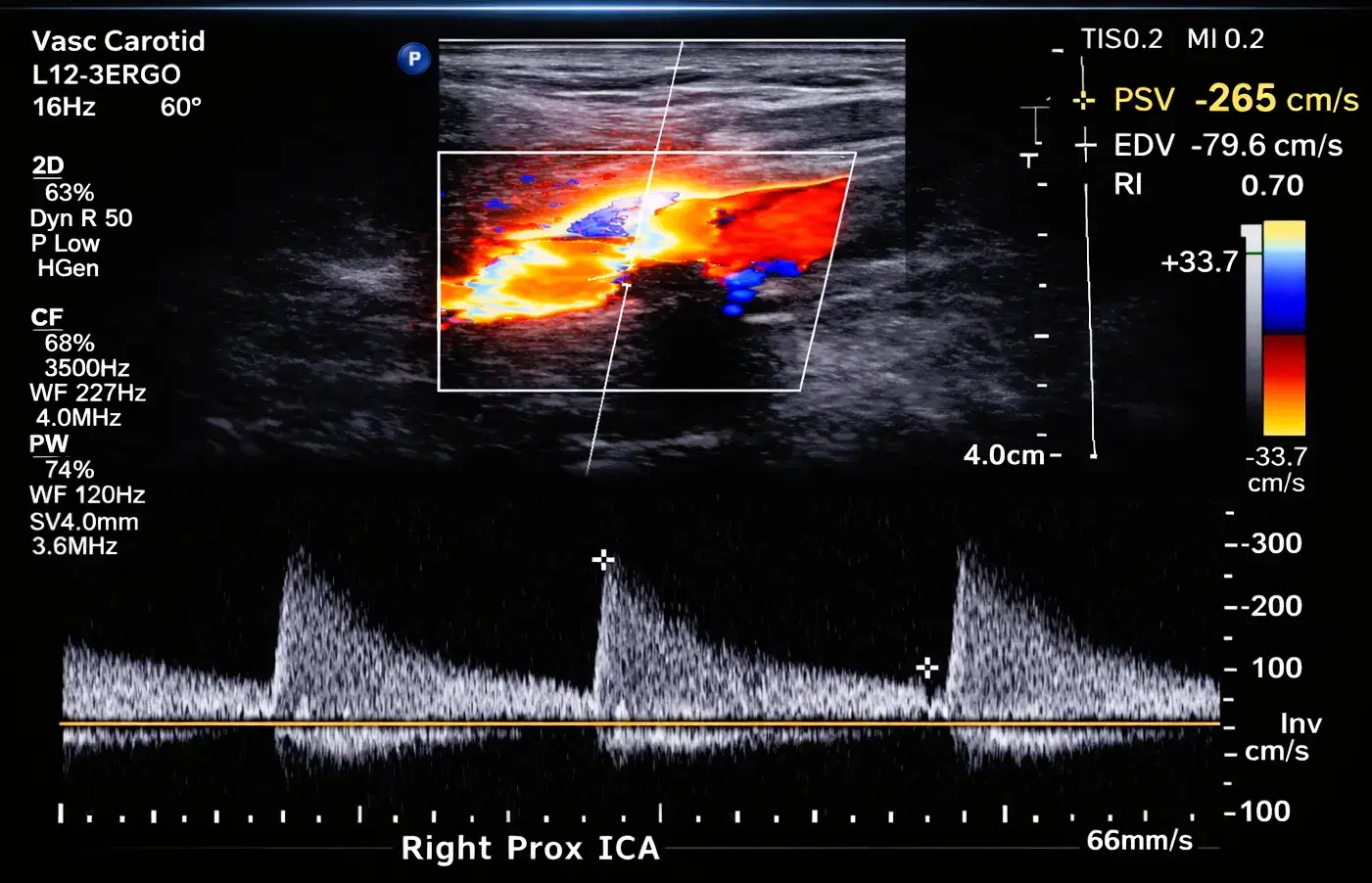
This comprehensive course provides physicians with an in-depth, clinically focused review of vascular ultrasound principles essential to accurate interpretation of cerebrovascular studies. Designed for flexibility and depth, the program combines online, self-paced learning with 8 hours of live, instructor-led education, allowing participants to build foundational knowledge while benefiting from expert-guided discussion and real-time case review. Through targeted instruction in ultrasound physics, Doppler principles, and arterial hemodynamics, the course highlights how technical factors and physiologic conditions influence waveform morphology, velocity measurements, and overall diagnostic accuracy. Extracranial cerebrovascular anatomy and pathology are explored in detail, with emphasis on carotid and vertebral artery evaluation, collateral flow patterns, and common interpretive pitfalls encountered in daily clinical practice. Interactive, case-based examples guide participants through real-world scenarios involving elevated velocities, proximal and distal disease, turbulent flow, and confounding clinical factors that affect stenosis grading. While reinforcing standardized diagnostic criteria, the course also addresses situations in which strict velocity thresholds may be misleading. By integrating waveform analysis, anatomic findings, and clinical context, participants gain practical strategies to support accurate reporting, confident clinical decision-making, and consistent, high-quality vascular ultrasound interpretation.
Course Objectives
Upon completion of this course, participants will be able to explain fundamental ultrasound physics concepts as they relate to image formation, resolution, and Doppler principles; understand transducer selection and system optimization as they impact diagnostic image quality and Doppler accuracy; describe arterial hemodynamic principles, including the relationships between pressure, flow, velocity, resistance, and turbulence; recognize normal and abnormal Doppler waveforms and correlate waveform findings with underlying vascular pathology; apply standardized diagnostic criteria to evaluate arterial stenosis using velocity measurements and waveform analysis; identify normal extracranial cerebrovascular anatomy and common pathologic findings encountered during carotid and vertebral artery examinations; and integrate clinical history and indications to support accurate interpretation, reporting, and clinical decision-making in vascular ultrasound studies.
Target Audience
This training program is tailored for physicians, vascular sonographers, technologists, and healthcare professionals involved in the performance, interpretation, and clinical application of ultrasound and vascular diagnostic studies.